What physicians say about working locum tenens in government healthcare systems
June 18, 2026
Many physicians are familiar with locum tenens assignments in hospitals, clinics, and health systems, but few have explored government locum tenens jobs or opportunities within government healthcare.
Government healthcare systems collectively care for millions of patients across the United States, including veterans, active-duty military personnel, Native American communities, incarcerated populations, and patients living in rural or underserved areas.
While these assignments aren't a good fit for everyone, physicians who work in government healthcare often describe them as among the most rewarding work of their careers.
What counts as a government healthcare facility?
Government healthcare encompasses several major federal healthcare systems, including:
Veterans Affairs (VA) hospitals and clinics offering VA physician jobs and VA locum tenens assignments nationwide
Indian Health Service (IHS) facilities
Department of Defense (DoD) and military treatment facilities with DoD physician jobs spanning military bases across the country and abroad
Federal Bureau of Prisons (BOP) correctional medicine facilities
These offer physicians a practice environment that differs in several ways from private healthcare settings.
One license for all federal physician jobs
One of the most practical advantages of government locum tenens work is something that doesn't always make the highlight reel: licensing.
In private-sector locum tenens, obtaining a new state medical license for each assignment is one of the most common friction points physicians encounter. The process can take months, require significant paperwork, and incur high costs—all before a physician sees a single patient.
Federal healthcare facilities operate differently. Because they fall under federal jurisdiction, physicians can typically work across Veterans Affairs, Department of Defense, Indian Health Service, Federal Bureau of Prisons, and other federal facilities nationwide with a single active state medical license. A physician licensed in Utah can take an assignment in New Mexico and then move to a facility in Montana without having to pursue additional licensure in either state.
For physicians who want the freedom to work across the country, or who simply want to spend their time practicing medicine rather than navigating state licensing boards, this is a significant advantage. It removes one of the most common barriers to taking on locum assignments and opens up a much wider range of opportunities from the start.
As licensing is one of the most common frustrations physicians mention when discussing locum tenens work, these federal opportunities offer a shortcut by removing much of that barrier. They can open the door to assignments across the country without the overhead.
Why physicians choose government physician jobs
The providers who gravitate toward VA, DoD, and Indian Health Service physician jobs—and government healthcare locum tenens work more broadly—often cite similar motivations: service, community impact, professional fulfillment, and the chance to make a tangible difference.
Many want work that feels connected to a larger mission or to enjoy the freedom from some corporate healthcare pressures. It offers flexibility that can be appealing for physicians who want to explore different practice settings without making a long-term commitment.
As locums family physician Dr. Tina Siu explains, "With me, with locums, I have that flexibility of saying, 'No, I don't want this job.' Or, 'Huh, this is something that I would like, if I practiced medicine in a permanent position later on.'"
Others appreciate the opportunity to serve communities that have historically struggled to access healthcare. Some enjoy the variety of clinical work and the chance to practice medicine in environments that differ significantly from those of large health systems.
For orthopedic surgeon Dr. Sonya Sloan, the mission was a major draw.

The passion to serve indigenous people, another minority group I had a heart for, has been excellent, so it's been a wonderful fit for me.
Indian Health Service physician jobs: Mission-driven medicine
IHS assignments stand out amongst government locum tenens jobs because they combine clinical work with deep community engagement. Physicians working for the IHS fill Indian Health Service physician jobs that are genuinely mission-driven and often life-changing.
Serving underserved populations
Providers working in IHS facilities often serve patients who face significant challenges accessing healthcare. Because many facilities are located in rural areas where recruiting permanent physicians can be difficult, locum tenens physicians often play a critical role in helping patients maintain access to care.
Dr. Wendy Carle, who practices internal medicine, worked in Shiprock, New Mexico, and found herself drawn to the opportunity.
"It really did speak to me."
Strong community relationships
For many physicians, one of the most rewarding aspects of IHS work is the relationship they build with patients and communities. Unlike in some healthcare settings, where patients cycle through providers, physicians often convey a level of appreciation and connection that leaves a lasting impression.
Dr. Carle experienced this firsthand while working in an Indian Health Service facility.

I always heard, 'Thank you very much for coming to help us here.' So it was really meaningful.
Government assignments can also create an unusual level of continuity for locum tenens providers. While many locums roles involve filling short-term staffing gaps, physicians who return to the same communities over time often become familiar faces to both patients and staff.
Dr. Sloan found this to be the case during her long-running assignment serving the Navajo Nation.
I have patients who know when I am coming back, or I have people who have heard about me in the community and want to come and see me.
After returning to the same facility for years, Sloan says the experience feels less like temporary coverage and more like being part of the community.
"It's more of a family feel."
Dr. Sloan isn't the only physician who has experienced that continuity. Locum pediatrician Dr. Beverly Ricker says returning to the same communities over time allowed her to build meaningful relationships with patients and families.

I've seen the second and third child in the same family at different assignments where I've gone to frequently.
"The fact that I'm not there all the time doesn't really seem to interfere with making a connection with the patients."
Cultural immersion
The cultural experiences can also be equally meaningful.
While working in the Navajo Nation, Dr. Sloan participated in a traditional cleansing ceremony conducted throughout the hospital following the COVID-19 pandemic. Clinical operations paused while community members observed the ceremony.
"It was a moment, and I appreciated being part of that," she says.
Family medicine physician Dr. Christine Kramer reflects on her privilege of being in the Grand Canyon and taking care of the Havasupai people while working as a locum tenens for IHS.
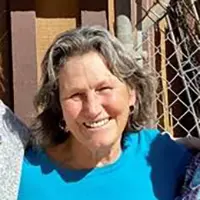
That's what kept me going back. I loved the adventure of it, I loved being in the Grand Canyon. These people have occupied that village for more than a thousand years.
"They have attributes that are unique, including this understanding that they're the guardians of this incredibly beautiful place.
“I'm a guest here. This is their land; this is their treasure. I always want to be respectful about the tribe and how they do things."
Caring for the underserved: Locums on the Havasupai Reservation
Broad-spectrum medicine
Indian Health Service physician jobs also expose practitioners to a wide range of clinical experiences.
In many IHS facilities, physicians manage everything from routine primary care needs to complex trauma cases. Dr. Sloan says the clinical work often reflects the realities of life on the reservation. She recalls treating injuries from livestock handling, hunting accidents, and falls during daily chores. One patient suffered a fractured femur after being struck by an arrow during an elk hunt.
"You're like, 'Who does this?'" she says. "It's comical sometimes, but it's also a lot more livestock issues and injuries, wild livestock as well. A lot of blunt trauma, too."
Dr. Sloan also described caring for motor vehicle accidents, open fractures, vascular injuries, and other injuries from animal encounters.
How is that for broad-spectrum medicine? In short, the variety can be appealing.
Resourcefulness
Physicians also describe government medicine as an exercise in resourcefulness. While many facilities are well equipped, some operate with older infrastructure, limited specialty access, or equipment constraints that require physicians to adapt. The environment often means locum tenens can make more independent decisions and learn to work within the resources available to them.
Dr. Sloan recalls periods when critical orthopedic equipment was unavailable, and patients requiring advanced care had to be transferred to larger facilities.
"The answer is yes and no," she says when asked whether she has everything she needs to do her job.
We do ship things out, and they use a helicopter and/or a plane to send them to Arizona and Albuquerque to handle the higher-level work.
The challenges and realities of government medicine
Government healthcare assignments are rewarding, but providers should go in with realistic expectations.
Pay
Compensation can sometimes be lower than comparable positions in the private sector.
"It's a government-type facility, so you may be making a bit less than you'd normally expect, but it's worth it," Dr. Sloan says.
Isolation and staffing shortages
Some facilities are located in rural or isolated areas. Recruiting permanent physicians can be difficult, which is one reason locum tenens coverage remains so important.
Resource limitations
Dr. Sloan described periods when critical orthopedic equipment wasn't available, and older facilities required ongoing renovations. Although most locations provide the tools physicians need to practice safely, some facilities operate with fewer resources than physicians may be accustomed to elsewhere.
Bureaucracy
It’s worth noting that federal facilities often operate within established procedures, security requirements, and organizational structures that may differ from those of private hospitals or physician-owned practices.
Heavy trauma loads
The patient population can present unique challenges as well. Some government facilities care for patients with significant chronic disease burdens, limited healthcare access, or social challenges that contribute to more complex medical needs.
Cultural learning curve
Physicians who succeed in these environments tend to approach the work with humility and a willingness to learn from the communities they serve. For physicians who arrive expecting to immediately change systems or impose their own way of doing things, the adjustment can be difficult.
But for those willing to listen and adapt, the experience often becomes one of the most memorable parts of the assignment.
The culture demands everything there. You need to be respectful of that, first and foremost.
Why do many physicians keep coming back to government locum tenens jobs
The facilities may be rural. The bureaucracy may be different. The patient population may present challenges that don't exist elsewhere. But physicians who find that government locum tenens jobs are the right fit often discover something just as rare: the feeling that their work is making a visible difference in a community that needs them.
Despite the challenges, many physicians describe government physician jobs as among the most purposeful and substantial of their careers.
CompHealth can help you find the opportunity that’s right for you. View current job openings or give us a call at 800.453.3030.