

2025 Physician Sentiment Survey: What physicians really think about work and leadership
December 10, 2025
If you’ve ever felt both grateful for your work and frustrated by it in the same breath, you’re not alone. According to CHG Healthcare’s 2025 Physician Sentiment Survey, most physicians still find meaning in their work—but the strain of administrative tasks, economic uncertainty, and lack of voice in decision-making is taking its toll.
The survey gathered insights from more than 900 practicing physicians across the U.S. to better understand how doctors feel about their work, leadership, and the changing healthcare landscape. The results reveal a profession that’s proud yet tired, engaged yet often unheard, and seeking ways to regain balance, autonomy, and purpose.
Most physicians are satisfied—but not fully engaged
Here’s the good news: 74% of physicians say they’re satisfied with their current role, and nearly two-thirds (64%) plan to stay with their current organization for at least another year. That’s a strong indicator of overall stability in the workforce.
But there’s a deeper story underneath that number. Satisfaction doesn’t necessarily mean engagement. Only 18% of physicians in the survey qualified as “highly engaged,” meaning they felt connected to their organization, trusted leadership, and were proud to recommend their workplace to others. In fact, only 29% would recommend their organization as a great place to work.
That gap between being content and being truly engaged is telling. Many physicians aren’t dissatisfied enough to leave, but they also aren't inspired enough to stay for the long term.
The biggest pain points for physicians
Ask any physician what’s getting in the way of their best work, and chances are you’ll hear the same response—too much documentation (50%) and administrative work (34%). Other major frustrations include:
Staffing shortages with clinical staff (35%) and physicians (32%)
Leadership not listening to physicians (34%)
Heavy workloads (33%)
Lack of transparency (27%)
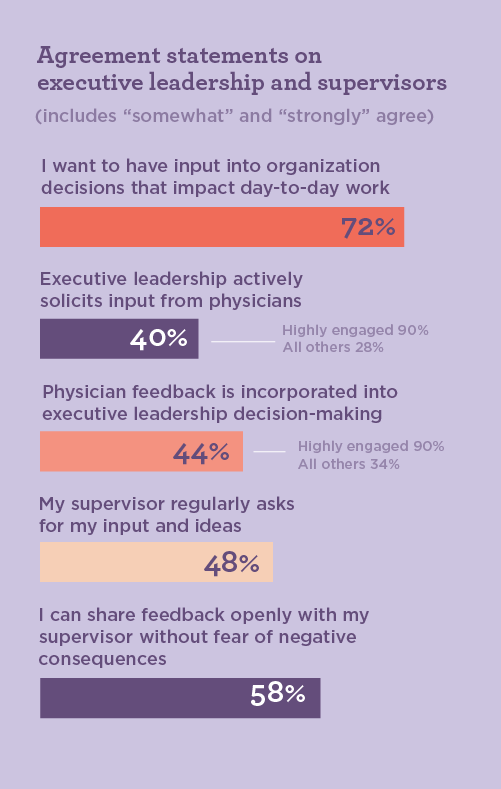
Physicians consistently say they want to spend more time with patients and less time at a computer. Many are also seeking leaders who listen and communicate more openly. Only about two in five physicians say they trust executive leadership or feel aligned with organizational decisions. That lack of trust and transparency erodes engagement and can ultimately drive good physicians out the door.
Economic pressures are changing how physicians work
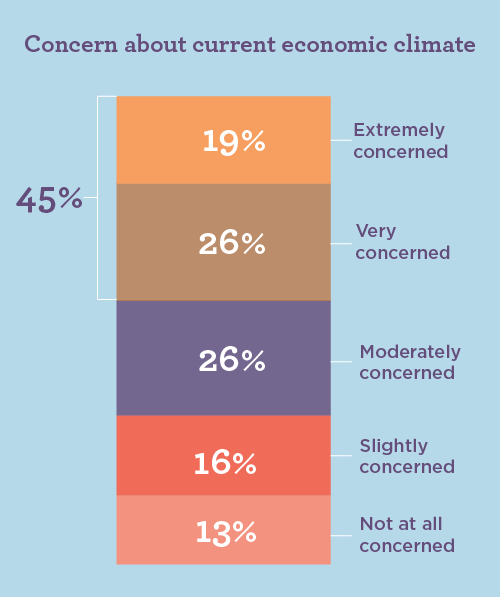
Even beyond the walls of their workplaces, physicians are feeling the weight of economic uncertainty. Nearly half (45%) say they’re very or extremely concerned about the economy, and 64% say those concerns have grown in the past year. They cite everything from public health instability and funding cuts to reimbursement changes and prescription drug costs.
In response, many are seeking ways to enhance their financial outlook. About 30% plan to supplement their income through moonlighting, and 31% are exploring nonclinical work opportunities. For those already working locum tenens, nearly half say they plan to take on more shifts.
What are my skills worth? How locum tenens pay and salary work for physicians
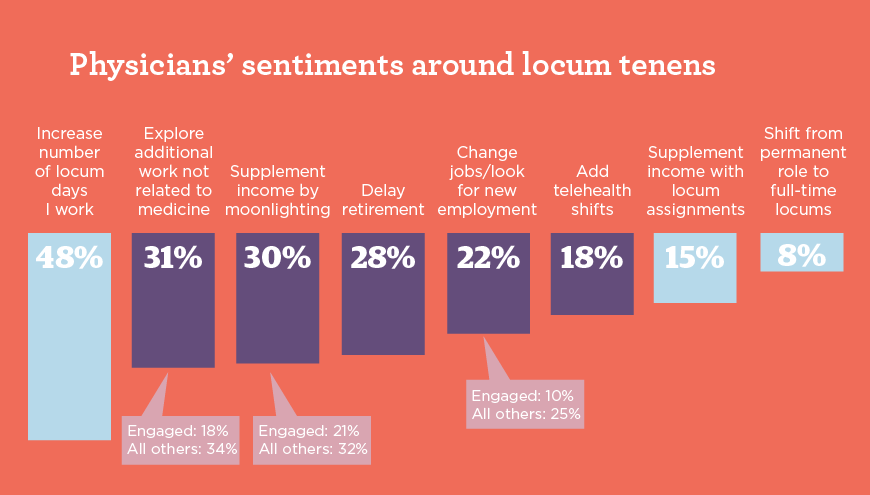
It’s not surprising—locums work offers flexibility and additional income without the long-term commitment of taking on a second job. For physicians exploring this path, our guide to working as an independent contractor breaks down the logistics, from contracts and taxes to insurance and benefits.
Physicians want a voice—and they want to be heard
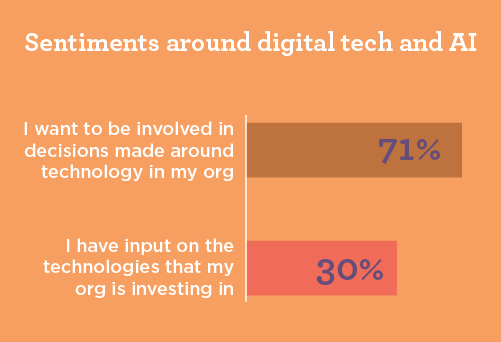
Nearly three out of four physicians say they want more input into decisions that affect their daily work. But only 40% say executive leaders actually ask for their feedback—and even fewer believe their input is acted on.
The issues physicians most want a say in are the ones that most affect their professional lives:
Compensation models and job expectations
Hiring and staffing decisions
Use of AI and technology
Including physicians in these conversations doesn’t just make them feel heard—it builds trust and alignment. When physicians understand why leadership makes certain decisions, even difficult ones, they’re far more likely to stay engaged and supportive.
Too much work, not enough time
Physicians are still working long hours—an average of 45 hours per week in scheduled shifts, plus another 15 hours on administrative tasks. That’s 60 hours a week, often at the expense of personal time and patient connection.
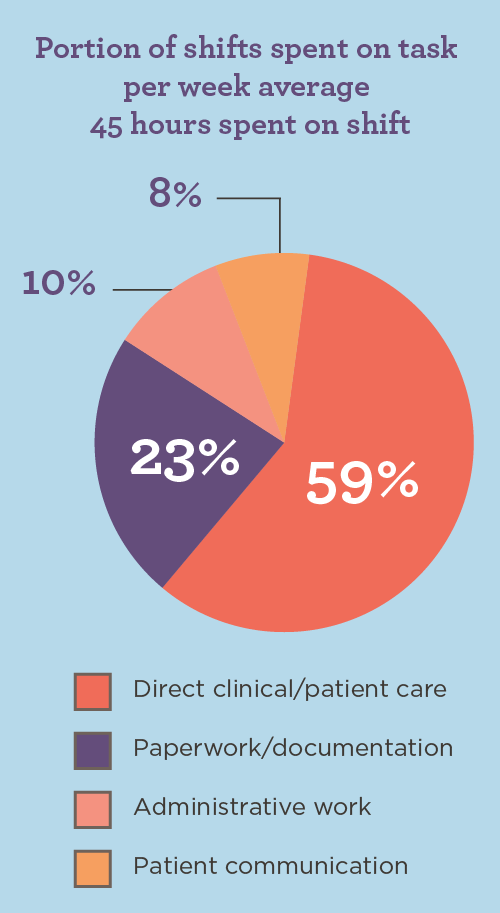
Nearly 40% say they have less free time than they did a year ago, and more than a quarter (28%) report spending less time with patients. It’s a vicious cycle: less time for rest and recovery leads to higher stress, which in turn affects the quality of care and personal well-being.
Many hope that technology, particularly AI, can help alleviate the burden. Over 70% believe AI could improve efficiency, but fewer are convinced it will actually reduce their workload or help them spend more time with patients. That skepticism underscores the importance of involving physicians in the implementation of new tools.
Needing a change? Learn how these physicians got what they wanted out of their career
Strong leadership, strong engagement
The biggest differentiator between satisfied physicians and highly engaged ones isn’t compensation or workload—it’s leadership. Physicians who feel heard, trusted, and valued by leadership are far more likely to be engaged and remain long-term.
Highly engaged physicians were:
46 percentage points more likely to be satisfied with leadership transparency
40 percentage points more likely to say leadership communicates openly
Far less likely to cite “leadership not listening” as a significant challenge
These differences aren’t about money or policy—they’re about culture. Transparent communication, visible leadership, and genuine partnership go a long way toward creating workplaces where physicians feel supported and proud to stay.
Finding balance, autonomy, and purpose
If you’re a physician feeling stretched thin, you’re not alone—and you’re not without options. Many physicians are exploring ways to regain control of their schedules and reconnect with the reasons they entered medicine in the first place.
Working locum tenens can be one way to achieve that. It offers the flexibility to choose when and where you work, the chance to experience new environments, and often, the opportunity to rediscover what you love most about practicing medicine.
Discover how locum tenens can help you reclaim balance, autonomy, and purpose in your career. Give us a call at 800.453.3030 to speak with a CompHealth recruiter or explore open physician jobs on our CompHealth job board.
Read the full Physician Sentiment Survey report on the CHG Healthcare blog: